The Tape-Out Test: Why the Semiconductor Industry Has a Talent Validation Problem
Meticulous verification defines silicon design. Discover how MockWin's Symmetrical Interlock resolves the Talent Validation Problem by enforcing Context Integrity across the VLSI engineering lifecycle.

Quick Answer: What is the Symmetrical Interlock?
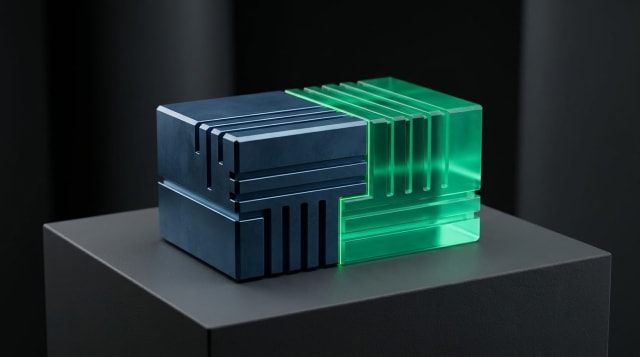
The Symmetrical Interlock is a candidate evaluation framework that mathematically aligns an employer's precise role requirements (the grooves, such as RTL, SystemVerilog, UVM, and STA) with a candidate's live performance simulation metrics (the matching ridges) captured through adaptive, cheat-resistant AI interview screening designed to assess unassisted performance-before a single human panel is scheduled.
1. The Silicon Hiring Bottleneck
Every silicon chip reaches production only after layers of rigorous verification, validation, and testing. From Static Timing Analysis (STA) and Design Rule Checking (DRC) to Layout Versus Schematic (LVS), every critical hardware assumption is challenged before tape-out. The semiconductor industry has spent decades proving a simple engineering principle: What isn't validated can't be trusted.
Yet when it comes to hiring the engineers building those chips, those standards often disappear. Organizations continue to rely on remarkably imprecise signals, including resume keywords and generic technical interviews, to hire for highly specialized roles. This is a massive operational vulnerability.
With the global semiconductor market fueled by the AI infrastructure boom-driving capital commitments expected to exceed $1 trillion through 2030, according to market projections published by SEMI-fabs and design centers are constructing physical capacity at an extraordinary pace. But physical capacity is only part of the formula; the ultimate bottleneck is human capital.
Workforce studies project a severe global shortfall of up to 157,000 skilled professionals by 2030, as reported in the Semiconductor Industry Association (SIA) labor projections. This quantitative deficit is compounded by an acute demographic shift: approximately one-third of the current silicon workforce is aged 55 or older, based on Deloitte's semiconductor workforce analysis.
In this hyper-competitive, zero-tolerance landscape, hiring is no longer just a talent acquisition challenge. It is a critical product-risk problem. A staffing delay or a bad hire in a critical role doesn't just slow down a pipeline; it directly threatens tape-out deadlines, risks costly silicon re-spins, and delays product launches.
2. Why Resumes Aren't Enough (Output ≠ Capability)
Historically, technical recruiting measured what candidates produced: code samples, written test answers, and static lists of tape-out nodes on a resume. Today, generative artificial intelligence has fundamentally altered that evaluation signal.
AI is moving deeper into hardware engineering. Modern LLMs and specialized tools can now easily generate Register-Transfer Level (RTL) code, build testbenches, write SystemVerilog, and generate automated test configurations, making high-quality hardware code and complex scripts effortless to produce.
Because generative tools have shifted the landscape, output is no longer a proxy for capability. A resume containing impressive project keywords cannot tell you whether an engineer truly understands the silicon architecture or if they simply know how to prompt an AI model.
3. The Talent Validation Problem
This structural friction has created a severe Talent Validation Problem-the inability to consistently distinguish between candidates who merely have high-level exposure to a domain versus those who possess the demonstrated competency required to close timing, debug a verification environment, or optimize physical implementation.
To solve this, technical evaluation must maintain Context Integrity: keeping every assessment tightly anchored to the specific engineering context, competency frameworks, and job requirements. Evaluating a Physical Design Engineer requires a fundamentally different competency model than evaluating a DFT Engineer or a Formal Verification Architect.
By moving away from unconstrained, easily spoofed coding environments, we transition our hiring pipelines from static claim-sorting into active, data-driven validation.
4. Sourcing as an Engineering Discipline
To build secure, scalable talent pipelines, hiring must be treated not as an administrative support function, but as a disciplined engineering pipeline. This framework relies on four fundamental principles:
- Context Integrity: Every simulation remains strictly anchored to the specific role and approved technical knowledge base, preventing candidates from steering the interview toward pre-rehearsed, AI-scripted talking points.
- Adaptive Technical Questioning: Rather than relying on static coding tests that AI can solve instantly, evaluations use dynamic, non-linear probing to test real-time technical defense of their work.
- Secure Environment Verification: Combining robust interview integrity controls, identity checks, and cheat-resistant proctoring to significantly neutralize remote fraud and proxy interviewing.
- Evidence-Based Decision Support: Automating the early-stage qualification layer to deliver structured, evidence-based scorecards, allowing senior panels to reclaim hours of design capacity.
The goal of this automation is not to replace human engineering judgment. It is to strengthen it by giving human judgment better, uncompromised evidence.
5. Output ≠ Capability: The Three-Dimensional Audit
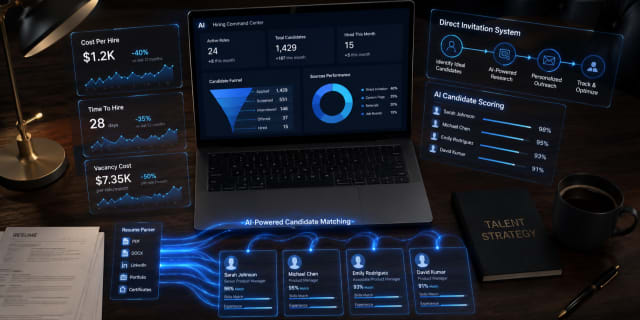
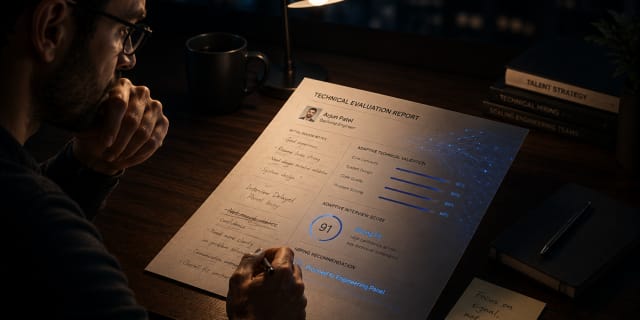
In an era where AI is moving deeper into hardware design, measuring completed code output is no longer a viable signal of competency. Instead of measuring what was produced, MockWin’s AI screening agents evaluate the engineer behind the output by focusing on three core vectors:
1. Can they defend it?
We do not stop at the first correct answer. The AI simulation changes timing margins, alters power budgets, or reduces area constraints mid-problem. If a candidate relied on an AI-generated template, their reasoning breaks down. An engineer who understands the architecture will adapt, explain the trade-offs, and pivot their approach.
2. Can they break it?
Candidates are presented with a potentially flawed block of RTL and asked: Where are the hidden assumptions or failure modes in this block? What edge cases will cause this simulation to fail? The ability to audit, disassemble, and find failure modes is far more revealing than prompting a tool for a clean-looking block of code.
3. Will they challenge it?
AI can generate answers, but it cannot take responsibility for engineering outcomes. Our platform measures whether a candidate blindly signs off on automated output because the compiler passed, or if they actively challenge, audit, and verify the logic before sign-off.
6. Introducing the Symmetrical Interlock
The Symmetrical Interlock operates on the principle that a reliable hiring signal cannot exist in a vacuum. It requires two perfectly matched components that click together with zero tolerance for error:
Symmetrical Role Requirements (STA, DFT, UVM, RTL parameters)
Performance Evidence (Designed to Assess Unassisted Capability)
- The Employer Defines the Signal: You establish the precise "grooves" of the vacancy-the exact RTL, SystemVerilog, UVM, STA, and DFT competencies the open role demands.
- The Candidate Demonstrates Capability: The candidate completes an active, live performance simulation designed to assess unassisted capability, presenting matching "ridges" in real-time.
- MockWin Connects the Evidence: Our engine is designed to connect the two datasets, generating structured performance evidence to help assess whether the candidate meets the team's engineering standards.
7. Claims → Performance Evidence
The Symmetrical Interlock is not designed to replace the traditional resume. Rather, it represents an evolution of candidate evaluation:
The resume remains highly useful as a historical ledger of an engineer's academic nodes, corporate tenures, and tape-out history. However, MockWin adds the critical layer of active performance evidence designed to assess unassisted capability. By pairing what a candidate says they have done (the resume) with what they demonstrate during the performance simulation, you create a more complete hiring signal by combining historical claims with observed performance evidence.
8. Securing the Pipeline Against Remote Interview Fraud
In hardware engineering, security is paramount. A single compromised remote hire could expose proprietary instruction set architectures, netlists, or RTL configurations. Unfortunately, standard remote recruitment models face severe threat vectors:
- Invisible AI Copilots: Candidates are increasingly utilizing undetectable live AI interview copilots-including real-time desktop overlays-to capture coding questions and display instantly drafted solutions on screen, completely bypassing standard video interface and screen-share checks.
- Proxy Impersonation: Outfitted with synthetic deepfakes and coordinating with domestic "laptop farms," fraudulent actors are actively passing standard video screens to secure high-paying engineering roles.
To insulate hardware firms from IP leakage, MockWin deploys a cheat-resistant 360° proctoring suite. By synthesizing eye-tracking anomaly signals, voice pattern analyzers, and dynamic AI query cross-verification, the system is designed to significantly neutralize external machine assistance and immediately flag proxy attempts.
9. Traditional vs. MockWin
To visualize the operational lift, we compare the structural and performance differences between traditional resume-based recruiting and the MockWin Symmetrical Interlock model:
| Operational Metric | Traditional Resume Pipeline | MockWin Symmetrical Interlock |
|---|---|---|
| Primary Medium | Static text resumes, portfolios, and unverified profiles. | Adaptive, high-fidelity AI interview screening. |
| AI Cheat-Vulnerability | Extremely High (AI-written scripts & claims). | Highly Resistant (live, proctored verbal & logical analysis). |
| Engineering Resource Drain | Substantial weekly hours wasted on unvetted phone screens. | Drastically reduced recruiter and engineering overhead. |
| Average Time-to-Decision | 14 to 30+ days. | Median 48 hours. |
| Candidate Experience | Low engagement, black-box ATS resume filters. | High engagement, merit-based candidate showcase. |
10. Redesign the Hiring Workflow
Compare the physical steps required to qualify and hire a VLSI engineer under both paradigms:
By compressing the diagnostic timeline, you bypass multiple rounds of speculative screening and isolate candidate merit before spending expensive engineering and recruiting hours.
11. Stop Guessing. Validate Your Pipeline.
In a digital economy flooded by AI-generated resume noise, continuing to run evaluation on trust is no longer a viable business strategy. It is a massive operational tax on hardware engineering teams facing tight tape-out dates.
MockWin doesn't replace the technical interview. It helps determine who deserves the engineering team's time.
By embedding a Symmetrical Interlock directly at the front of your talent acquisition pipeline, you transition your organization from passive claim-sorting to active, data-driven performance verification, avoiding the pitfalls of managerial bias outlined in the landmark Branding Strength Assessment Research.
Turn semiconductor candidate claims into performance evidence.
We will build a custom-branded AI Interview Screening Portal tailored specifically to one of your active open VLSI or physical design vacancies in under 2 hours-completely free. We will pre-load your portal with 15 free candidate credits (providing 225 total minutes of unassisted performance evidence) so you can privately test our high-fidelity, cheat-resistant simulation on your active pipeline.
Secure Your Custom Pilot TodayFrequently Asked Questions
What is the Talent Validation Problem in the semiconductor industry?
The Talent Validation Problem is the difficulty organizations face in distinguishing between candidates who have surface-level exposure to hardware concepts and those who possess verified competency in highly specialized VLSI domains, a problem worsened by AI-generated resumes and portfolios.
How does MockWin reduce remote interview cheating and proxy fraud?
MockWin's high-fidelity AI screening platform is built with a highly secure, cheat-resistant environment. It combines adaptive questioning with 360-degree proctoring features-including passive eye-tracking anomaly sensors, voice pattern analysis, and real-time behavioral cross-checking-to significantly neutralize external AI assistance and detect proxy attempts.
Can MockWin replace live technical panels?
No. MockWin is designed to complement and protect your senior engineering resources. It serves as a high-fidelity skills-validation layer right after application, filtering out unvetted or AI-dependent claims, so your Principal Architects and Design Managers only spend their expensive, highly valued hours interviewing pre-validated candidates.
What technical roles can MockWin evaluate?
MockWin features standardized Enterprise Knowledge Foundations mapped across the entire VLSI engineering lifecycle. This allows for highly specialized, role-specific evaluations for Physical Design Engineers, DFT Engineers, Design Verification (DV) Engineers, SoC Architects, and more.
How do we initiate the semiconductor-specific pilot?
Getting started is completely frictionless. Simply visit mockwin.ai/enterprise, specify your open hardware engineering vacancy, and our team will deploy a custom-branded AI Interview Screening Portal pre-loaded with 15 free candidate credits in under 2 hours.