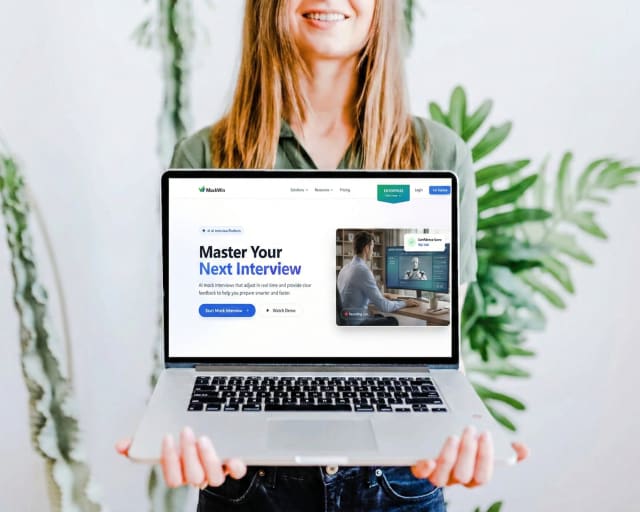
AI Mock Interviews vs Human Mock Interviews: Which Is Better
AI mock interviews vs human mock interviews — compare cost, feedback quality, availability, and effectiveness. Find out which interview practice method gets you hired faster. —
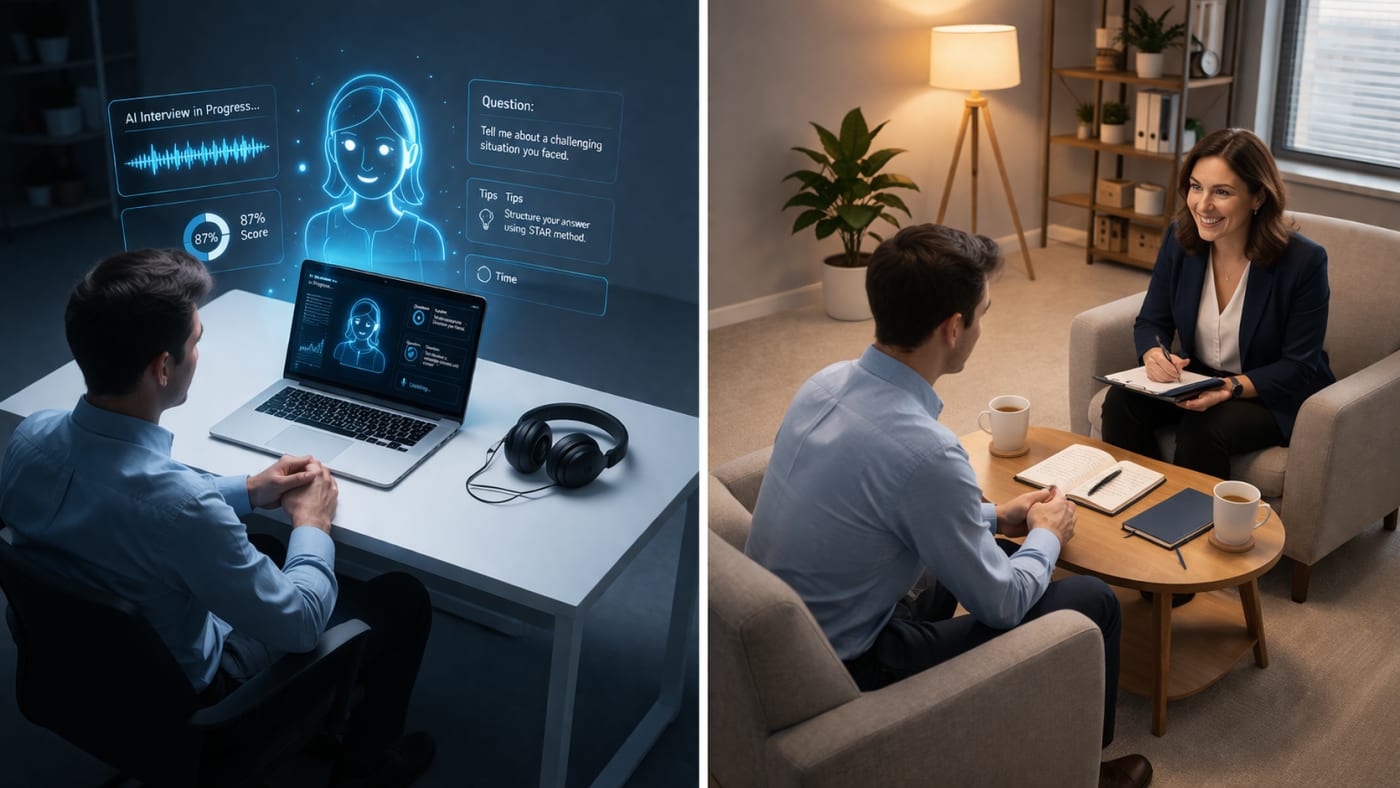
AI Mock Interviews vs Human Mock Interviews
What Are AI Mock Interviews?
AI mock interviews are automated practice sessions powered by artificial intelligence that simulate real interview scenarios in real time. These platforms use natural language processing, adaptive questioning algorithms, and computer vision to evaluate your answers, delivery, and non-verbal communication - then generate detailed performance reports instantly.
Unlike static question banks or flashcard apps, modern AI interviewers listen to your responses and generate dynamic follow-up questions based on what you actually said. This "drill-down" architecture mimics how a real hiring manager probes deeper into your experience. For example, if you mention leading a database migration project, the AI might follow up with "How did you handle the rollback strategy?" - just like a senior interviewer would.
Platforms like MOCKWIN's adaptive AI mock interviewer take this further by parsing your resume and the target job description to generate hyper-personalized questions. The AI identifies your specific skills, projects, and experience gaps - so every session is directly relevant to the role you're pursuing.
AI mock interviews also provide objective, consistent scoring across every session. Your tenth practice session uses the exact same evaluation criteria as your first - eliminating the inconsistency that comes with different human coaches having different standards.
What Are Human Mock Interviews?
Human mock interviews are one-on-one practice sessions conducted by experienced professionals - career coaches, former hiring managers, or industry mentors - who simulate a real interview conversation. The human interviewer brings emotional intelligence, industry context, and the ability to read subtle social cues that AI cannot fully replicate.
A skilled human coach adapts not just to what you say, but to how you feel. They notice when you're losing confidence mid-answer, when your body language contradicts your words, and when your energy shifts. They can pause the interview to coach you through a difficult moment - something AI sessions typically don't offer in the same emotionally intelligent way.
Human interviewers also bring deep industry-specific knowledge. A former Google hiring manager coaching you for a Google interview brings insider context about team culture, interview bar expectations, and the specific signals interviewers look for - nuances that no algorithm can fully capture.
According to LinkedIn Talent Solutions (2024), 83% of hiring managers say the interview is the single most important factor in their hiring decision. Practicing with someone who has been on the other side of that table provides an irreplaceable perspective on what separates a "good" answer from a "hire" answer.
Side-by-Side Comparison: AI vs Human Mock Interviews
The key differences between AI and human mock interviews come down to scalability, cost, feedback depth, and emotional nuance. This table breaks down each factor so you can make an informed decision based on your specific needs and preparation timeline.
| Factor | AI Mock Interviews | Human Mock Interviews |
|---|---|---|
| Cost | $0–$30/month (unlimited sessions) | $50–$300/hour per session |
| Availability | 24/7, instant access | Requires scheduling, limited slots |
| Consistency | Identical evaluation criteria every time | Varies by coach mood, experience, and style |
| Feedback Speed | Instant post-session reports | Often delayed 24–48 hours |
| Data Tracking | Tracks progress across sessions with metrics | Relies on subjective notes |
| Emotional Intelligence | Limited - detects sentiment, not empathy | High - reads energy, adjusts coaching in real time |
| Cultural/Industry Insight | General best practices only | Deep insider knowledge of specific companies |
| Scalability | Unlimited practice sessions per day | 1–2 sessions per week realistically |
| Non-Verbal Analysis | Computer vision tracks eye contact, posture, sentiment | Subjective observation, varies by coach |
| Salary Negotiation Prep | Not a core strength | Experienced coaches excel here |
Where AI Mock Interviews Win
AI mock interviews dominate in four critical areas: unlimited practice volume, objective data-driven feedback, 24/7 availability, and cost efficiency. These advantages make AI the superior choice for building foundational interview skills through repetition and measurement.
Unlimited Practice Volume
According to LeetCode's 2024 Annual Report, candidates who practice at least 5 mock interviews perform 60% better on actual interviews. With AI platforms, you can complete 5 sessions in a single evening - something that would take weeks to schedule with human coaches. Volume builds muscle memory, and muscle memory builds confidence.
Objective, Multi-Dimensional Feedback
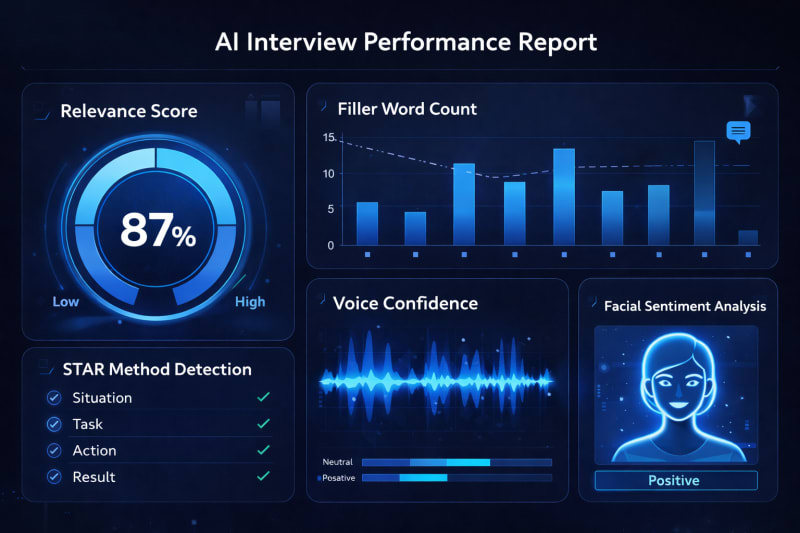
AI platforms deliver feedback that human coaches physically cannot. MOCKWIN's AI interview feedback system generates a multi-layered performance report after every session:
- STAR Detection - Flags whether your behavioral answers included Situation, Task, Action, and Result components
- Relevance Score - Grades your answer 0–100% on how directly it addressed the prompt
- Filler Word Count - Tracks "um," "like," and "you know" frequency per session
- Speech Pace - Measures words per minute and identifies rushed or sluggish delivery
- Confidence Meter - Visual graph of voice stability throughout the entire session
- Non-Verbal Analysis - Eye contact frequency, facial sentiment, and posture stability via computer vision
This level of granular, quantified feedback is impossible for a human to deliver consistently. A coach might notice you said "um" a lot - but they can't tell you it happened exactly 37 times with a 23% increase in the second half of the session.
Resume-Tailored Questions
With resume-based interview practice, AI platforms parse your PDF or Docx resume to extract specific skills, projects, and achievements. The AI then generates questions directly tied to your actual experience - like asking about scaling challenges in a project you led at a previous role - rather than generic textbook questions.
Cost Efficiency at Scale
The Math: AI vs Human Cost Per Session
A human coach charging $150/hour for 10 sessions costs $1,500. MOCKWIN's monthly plan provides unlimited AI sessions for a fraction of that price. Over a 3-month preparation period, AI delivers 50–100× more practice sessions per dollar spent. For candidates on a budget - especially fresh graduates - this cost difference is transformative.
Check MOCKWIN pricing plans for current options.
Where Human Mock Interviews Win
Human mock interviews excel in areas that require emotional depth, subjective judgment, and real-world industry experience. For senior-level candidates, culture-fit assessments, and final-round preparation, human coaching remains irreplaceable.
Emotional Intelligence and Adaptive Coaching
A great human coach reads the room. They notice when your confidence drops, when you're overcomplicating an answer, or when anxiety is making you rush. They can pause, reframe, and coach you through the moment - providing emotional support that builds lasting confidence, not just technical skill.
According to the JDP National Survey (2024), interview anxiety affects 92% of job candidates, with 17% reporting severe anxiety. A human coach who has helped hundreds of candidates work through this same anxiety brings therapeutic value that AI cannot match.
Insider Industry Knowledge
A former Amazon Bar Raiser running your mock interview knows exactly what Amazon's leadership principles evaluation looks like in practice. A former McKinsey interviewer knows what "structured thinking" actually means in a case interview versus what textbooks say it means. This insider context creates a qualitative advantage AI platforms are still catching up to.
Salary Negotiation and Soft Strategy
When the topic shifts from "answer this question well" to "how do I navigate a competing offer" or "should I push back on this lowball number" - human coaches provide strategic advice AI cannot. Negotiation is deeply contextual, political, and emotional. It requires reading between the lines of what a recruiter said, understanding corporate compensation structures, and knowing when to push versus when to accept.
Culture Fit and Team Dynamics
Some interviews aren't about what you know - they're about whether the team wants to work with you. Human coaches help you develop authentic responses that showcase your personality, values, and collaboration style. They can simulate the informal, conversational tone of culture-fit rounds that AI typically can't replicate with the same warmth.
How to Choose Between AI and Human Mock Interviews
The right choice depends on your career level, budget, timeline, and specific preparation needs. Here's a practical framework to decide which method - or combination - works best for your situation.
-
1
Assess your current skill level Identify your weakest areas - technical skills, behavioral answers, communication, or confidence. This determines whether you need volume (AI) or depth (human).
-
2
Start with AI for high-volume practice Use an AI mock interview platform for daily sessions to build baseline fluency and eliminate filler words, pacing issues, and structural weaknesses.
-
3
Upload your resume and target job description Feed your resume and specific JD into the AI platform so questions are tailored to your experience and the exact role you're targeting.
-
4
Track your progress with data Review AI-generated performance reports after each session - monitor relevance scores, STAR detection, filler word trends, and confidence metrics over time.
-
5
Book a human coach for final preparation Schedule 2–3 sessions with a human coach to refine culture fit, practice salary negotiation, and get subjective industry-specific feedback.
-
6
Combine both for interview-day readiness Do one final AI session the day before for confidence. Apply strategic insights from your human coach during the real interview.
The Hybrid Approach: Best of Both Worlds
The most effective interview preparation strategy in 2026 is not AI or human - it's AI and human working together at different stages. This hybrid approach maximizes both the volume-driven consistency of AI and the emotional depth of human coaching.
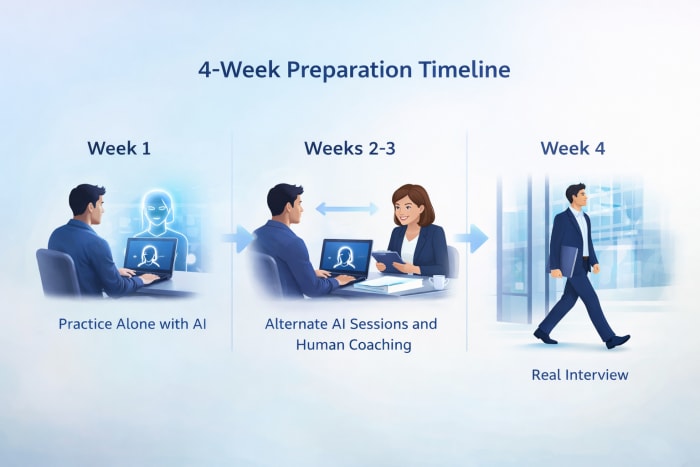
The Ideal 4-Week Preparation Timeline
| Week | Method | Focus |
|---|---|---|
| Week 1 | AI (daily) | Baseline assessment, identify weak areas, practice fundamentals |
| Week 2 | AI (daily) + 1 Human session | Drill weak areas with AI, get strategic direction from coach |
| Week 3 | AI (daily) + 1 Human session | Advanced scenarios, culture-fit practice, negotiate prep |
| Week 4 | AI (2–3 sessions) + 1 Human session | Final polish, confidence building, full dress rehearsal |
The key insight is that AI and human coaching serve different functions. AI is your daily gym - it builds strength through consistent repetition and objective measurement. Human coaching is your game-day strategist - they refine your approach, read your opponents, and help you perform under real pressure.
What a Real AI Mock Interview Session Looks Like
If you've never tried an AI mock interview, the experience might surprise you. Modern platforms go far beyond reading questions off a list. Here's what a typical session looks like on MOCKWIN:
- Upload your resume and paste the job description - The AI parses both documents, extracting your skills, experience, and the role's requirements to generate a tailored question set.
- Select your interview mode - Choose between Full Simulator (strict, timed, no hints) for pressure testing, Co-Pilot mode (guided practice with live hints) for learning, or The Dojo (focused drills) for mastering specific question categories.
- Begin the real-time conversation - The AI asks questions via natural text-to-speech with under 1.5-second response latency. You answer naturally. The AI listens, understands, and generates contextual follow-ups - not scripted next-questions.
- Receive your performance report - Immediately after the session, you get a detailed breakdown: STAR detection for behavioral answers, relevance scores, a technical stack report grading specific skills (e.g., "React: Advanced," "SQL: Intermediate"), filler word counts, speech pace analysis, and a confidence meter showing voice stability throughout.
MOCKWIN also offers a Challenge Mode where you complete an interview, generate a shareable link, and challenge friends to beat your score on the exact same interview. This peer competition drives engagement and creates accountability - something neither solo AI practice nor one-on-one coaching typically provides.
For candidates who prefer practicing on the go, the MOCKWIN mobile app brings the full AI interview experience to your phone. And with the Chrome extension, you can click "Practice for this Job" directly on any LinkedIn or Indeed job listing - the extension scrapes the JD and launches a custom session instantly.
Frequently Asked Questions
Are AI mock interviews as good as human mock interviews?
AI mock interviews match or exceed human mock interviews in several areas including availability, consistency, and data-driven feedback. However, human mock interviews still offer stronger emotional intelligence and nuanced cultural insights. According to Harvard Business Review (2023), candidates who practice mock interviews - AI or human - are 2× more likely to receive job offers.
How much do AI mock interviews cost compared to human coaching?
AI mock interview platforms typically cost between $0 and $30 per month for unlimited sessions. Human interview coaches charge $50 to $300 per hour for one-on-one sessions. AI platforms deliver 10× to 50× more practice sessions per dollar spent, making them significantly more cost-effective for high-volume repetition and daily practice.
Can AI mock interviews help with behavioral interview questions?
AI mock interviews effectively evaluate behavioral questions using STAR method detection. Advanced platforms like MOCKWIN automatically identify whether your answer includes Situation, Task, Action, and Result components, then provide a relevance score from 0 to 100%. According to SHRM (2025), 92% of recruiters use behavioral questions, making this practice essential.
Do companies use AI interviews in their actual hiring process?
Yes - 65% of Fortune 500 companies now use AI-powered assessment tools in their hiring pipeline, according to McKinsey Global Institute (2025). Practicing with AI mock interviews familiarizes candidates with the format, tone, and pacing of real AI-driven corporate interviews, giving them a significant advantage.
What feedback do AI mock interviews provide?
AI mock interviews provide multi-dimensional feedback including content relevance scores, STAR framework detection, filler word counts, speech pace analysis (words per minute), tone assessment, and non-verbal cues like eye contact and posture. This granular, data-driven feedback is difficult for human coaches to replicate consistently across every session.
Should I use AI mock interviews or human mock interviews?
The most effective strategy combines both methods. Use AI mock interviews for daily high-volume practice, technical drilling, and objective performance tracking. Use human mock interviews for final-stage preparation, industry-specific cultural insights, and salary negotiation rehearsals. This hybrid approach maximizes both consistency and emotional depth.
How many mock interviews should I do before a real interview?
Candidates who practice at least 5 mock interviews perform 60% better in actual interviews, according to LeetCode's 2024 Annual Report. For competitive roles, aim for 10 to 15 practice sessions - using AI platforms for daily repetition and reserving 2 to 3 sessions with a human coach for final refinement.
Can AI detect body language during mock interviews?
Advanced AI mock interview platforms use computer vision to analyze body language in real time. MOCKWIN tracks eye contact frequency, facial sentiment (confidence vs. anxiety), and posture stability throughout the session. Body language accounts for 55% of how your message is perceived, according to UCLA research by Albert Mehrabian.
Summary
TL;DR
Use AI mock interviews for unlimited, affordable daily practice with objective feedback. Use human coaches for emotional depth, industry insights, and final-round preparation. Combining both delivers the strongest results.