
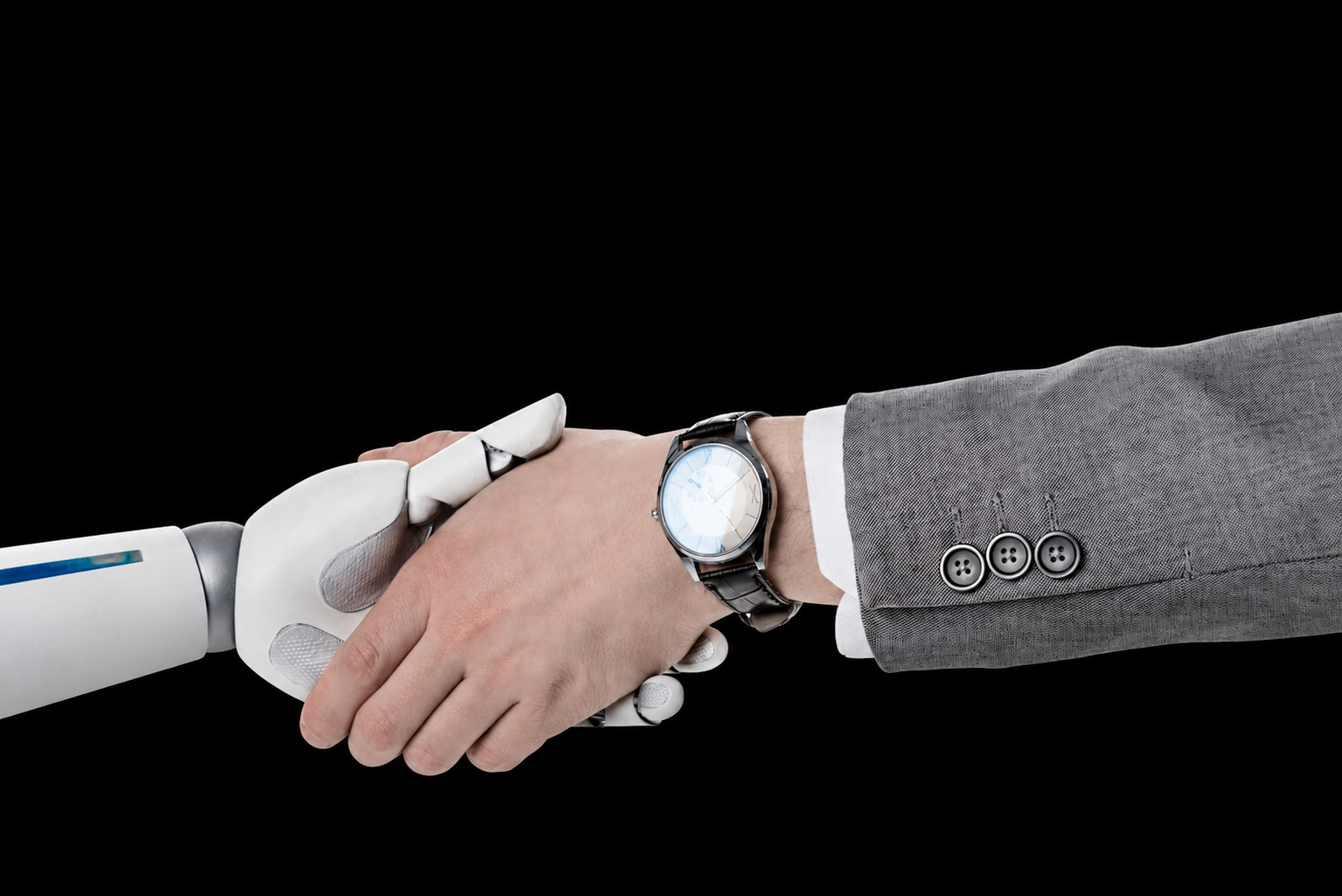
Your Next Interviewer
AI hiring is shifting from chatbots to agents that interview you live. Here's how to prep with an adaptive AI interviewer instead of a question bank.
Your Next Interviewer Won't Be a Chatbot. It'll Be an Agent.
The short version
AI in hiring is moving from chatbots that hand you questions to agents that actually interview you ; listening, probing, and judging in real time. Practicing against a static question bank prepares you for the old world. To prepare for the room you'll actually walk into, you need to rehearse with an AI interview agent that adapts to your answers, the way MockWin's adaptive AI interviewer does.
What's inside
- The quiet shift no one prepared you for
- Chatbot vs. agent: what actually changes in an interview
- Why this is already happening to job seekers
- What an AI interview agent does differently
- The four things a question bank can't prepare you for
- How to practice for an agent, not a chatbot
- The bottom line
- FAQ
There's a quiet shift happening in AI, and most people are still picturing the wrong thing when they hear the word.
They picture a chatbot ; a box you type a question into that types an answer back. But the real movement right now is away from that. We're moving from simple chatbots that respond to prompts toward autonomous, multimodal AI agents that listen, observe, reason, and act on their own. The difference sounds subtle. In practice, it changes everything.
And nowhere does it get more real than in a job interview. Because the same shift that's rewiring customer service and software is now reaching the one conversation that decides whether you get the offer. Your next interviewer probably won't be a chatbot reading from a script. It'll be an AI interview agent — and the way you prepare has to change with it.
A chatbot prepares you. An agent interviews you.
Think about how most people prep for interviews today. You open a tool, you get a list of "50 common interview questions," and you read through the suggested answers. Useful, maybe. But it's static. It's the same list for everyone, and it has no idea who you are or how you actually responded.
That's a chatbot's ceiling: it can hand you the questions. It reacts to a prompt and stops. It never finds out whether you could actually answer under pressure.
An AI agent does something fundamentally different. It conducts the interview. It asks a question, hears your answer, notices the hesitation in your voice, catches the moment you dodge the hard part — and decides what to probe next. The way a real interviewer would. You're no longer studying for the interview. You're rehearsing the actual thing.
Chatbot vs. agent: what actually changes
The word "agent" gets thrown around loosely, so it helps to be precise. The clearest test of whether something is truly agentic is simple: does it need a human to start every single action it takes? If yes, it's a chatbot wearing a fancier label. If it can take a goal and run the steps itself — asking, listening, deciding, following up — it's an agent.
Here's how that distinction plays out the moment you sit down for an interview.
| In the interview | Chatbot | AI Agent |
|---|---|---|
| Questions | Fixed list, same for everyone | Chosen live, based on what you just said |
| Follow-ups | None ; it moves to the next item | Drills into the weak or vague part of your answer |
| What it hears | Keywords matched against a template | Content and delivery ; structure, clarity, confidence |
| When you ramble | Scores the keywords anyway | Notices you avoided the question and circles back |
| Feedback | Generic score vs. a generic answer key | How a real panel would actually judge you |
Look down that right-hand column. That's not a quiz tool. That's an interviewer. And it's exactly the experience you'll want to have practiced before it counts.
See what a real-time, adaptive AI interview feels like →Why this matters for your next interview
Here's the uncomfortable truth: hiring itself is going multimodal and autonomous. AI moved past resume screening a while ago. It now talks to candidates, runs assessments, and increasingly conducts the interview from start to finish ; and more companies adopt it every quarter.
This isn't a forecast. It's already in the funnel you're applying through.
The trend line is unmistakable. Analyst surveys show only a sliver of organizations have fully deployed AI agents so far, but more than 60% expect to within two years — the steepest adoption curve of any emerging technology they track. Hiring is one of the first places that curve touches you personally.
⚠️ The trust gap is real ; and it cuts against you
Here's the catch: only about one in four candidates trusts AI to evaluate them fairly. That discomfort is understandable — but discomfort doesn't make the agent go away. It just means most people walk in unprepared for a format they've never rehearsed. The candidates who practice with an agent first don't freeze. They've already done this.
Practicing with a static question bank prepared you for yesterday's interviews. Practicing with an AI agent prepares you for the room you're about to walk into.
What an AI interview agent actually does
It's worth seeing the mechanics, because once you understand them, you understand exactly what you need to rehearse. A genuine interview agent runs a loop ; perceive, reason, act ; many times in a single conversation.
It asks ; then actually listens
The agent opens with a question tied to the role and your background. Then it processes your full answer: not just the words, but how you structured them and how confidently you delivered them.
It decides what to probe
If your answer was vague, hand-wavy, or skipped the hard part, it doesn't move on. It follows up ; "you mentioned you led that project, what was your specific contribution?" This is the part a question bank can never reproduce.
It evaluates content and communication together
A real panel doesn't just check whether you're technically right. It judges whether you can explain your thinking. The agent scores both ; the substance of your answer and the clarity of how you said it.
It gives feedback that reflects a real panel
Instead of a number against a generic key, you get structured feedback on where your answers landed, where you lost the interviewer, and exactly what to tighten before the real thing.
That loop is the whole point. It's why a serious mock interview can't be a PDF. The value lives in the adaptation.
The four things a question bank can't prepare you for
Old advice for "beating the bot" was defensive: stuff your answers with keywords, look at the camera, keep it short. That advice was built for a chatbot that matched text against a template. It falls apart against an agent ; because an agent is testing the exact things a keyword filter ignored.
The unscripted follow-up
You can memorize a perfect answer. You can't memorize the agent's reaction to it. The follow-up is where unprepared candidates fall apart ; and where rehearsal pays off.
Thinking out loud under pressure
An agent judges how you reason, not just your final answer. Reading model answers teaches you nothing about narrating your thinking in real time.
Pacing and the pause
Pause too long and some systems assume you're done. Ramble and you bury your point. You only learn your own rhythm by doing reps with something that responds.
Role-specific depth
A backend engineer, a PM, and a data scientist face completely different probing. A generic list can't go deep. An agent tuned to your role can.
Notice the pattern: every one of these is a behavior, not a fact. Behaviors are built through reps, not reading. That's the gap between studying and rehearsing ; and it's the gap an AI interview agent is built to close.
How to practice for an agent, not a chatbot
If the interview is adaptive, real-time, and multimodal, your preparation can't be a list of answers you skimmed the night before. Here's how to actually get ready ; and where MockWin fits, since this is the exact problem we built it to solve.
This is exactly what we built MockWin.ai to do. Our AI interviewer doesn't read from a script. It adapts to your responses in real time. It evaluates your communication and your content together ; not just what you said, but how you said it. And it gives feedback that reflects how a real human panel would judge you, instead of a generic score against a generic answer key.
In other words: it behaves like an agent, not a chatbot. Because that's what the moment calls for.
The bottom line
The interviewer of the future isn't a chatbot. It's an agent ; one that listens, probes, and judges the way a real panel does. That shift is already in the hiring funnel you're applying through, and it's accelerating fast.
You can't out-memorize an agent. You can only out-rehearse it. The candidates who walk in calm are the ones who've already had the unscripted follow-up, already narrated their reasoning out loud, already heard honest feedback and fixed it. Not because they read more — because they practiced against something that pushed back.
If the future of hiring is adaptive, real-time, and multimodal, your preparation has to be too. Stop studying for the interview. Start rehearsing the actual thing.
Feel the difference for yourself
Try a live, adaptive mock interview and see how it responds to you ; not to a script. It's the closest thing to the real room before you're in it.
Frequently asked questions
What's the difference between an AI chatbot and an AI agent in interviews?
A chatbot reacts to prompts and completes single tasks ; like handing you a list of questions or matching your answer's keywords against a template. An AI interview agent pursues a goal: it asks, listens, decides what to probe based on your answer, follows up on weak spots, and evaluates both your content and your delivery. The simplest test is whether it needs a human to trigger every action; an agent runs the steps on its own.
Will my next job interview really be conducted by AI?
Increasingly, yes ; especially in early rounds. The vast majority of companies already use AI to screen candidates, and a growing share now run the full interview through AI. Even when a human makes the final call, your first conversation is more and more likely to be with an AI interview agent, so it pays to rehearse for that format.
How do I prepare for an AI agent interview instead of a chatbot?
Shift from reading answers to rehearsing them. Practice with an adaptive AI interviewer that asks unscripted follow-ups, train on questions specific to your role, run interviews based on your own resume, and review feedback on both what you said and how you said it. Reps against something that pushes back beat any static question bank.
Can an AI interviewer really tell when I'm dodging a question?
A capable agent can. Because it evaluates the substance of your answer and not just keywords, it can notice when you've stayed vague or skipped the hard part ; and it will follow up to get the specifics, exactly the way an experienced human interviewer would. That's why rehearsing the follow-up matters as much as rehearsing the opening answer.
Is practicing with an AI interviewer better than using a list of common questions?
For today's hiring, yes. A question list is static and identical for everyone, so it can only prepare you for the opening question, never the follow-up. An AI interview agent adapts to your responses in real time, mirrors the pressure and pacing of a real conversation, and gives you panel-style feedback — which is what you'll actually face.
Tags
Neelekhana
Content Writer and SEO Specialist crafting impactful, search-optimized content that drives visibility blending creativity with data to deliver meaningful results.
Related Articles

Interview Preparation Mistakes That Cost You the Offer
Discover the 15 most costly interview preparation mistakes that silently kill your job offer chances and exactly how to fix them with AI-powered mock interview practice on MockWin.ai.

How Adaptive AI Questioning Mimics Real Interviewers
Stop practicing with scripts that don’t talk back. Discover how adaptive AI questioning moves beyond static lists to mimic the real-time follow-ups, pressure-testing, and "signal hunting" of senior human interviewers. Learn why training with a responsive AI leads to 2.5× higher candidate confidence.

From First Practice to Job Offer: MockWin Success Framework
The exact 4-stage framework MockWin candidates use to go from awkward first practice to confident job offer. Stages, milestones, and feature map inside.